
EDI Integration Services Without the Per-Document Fee
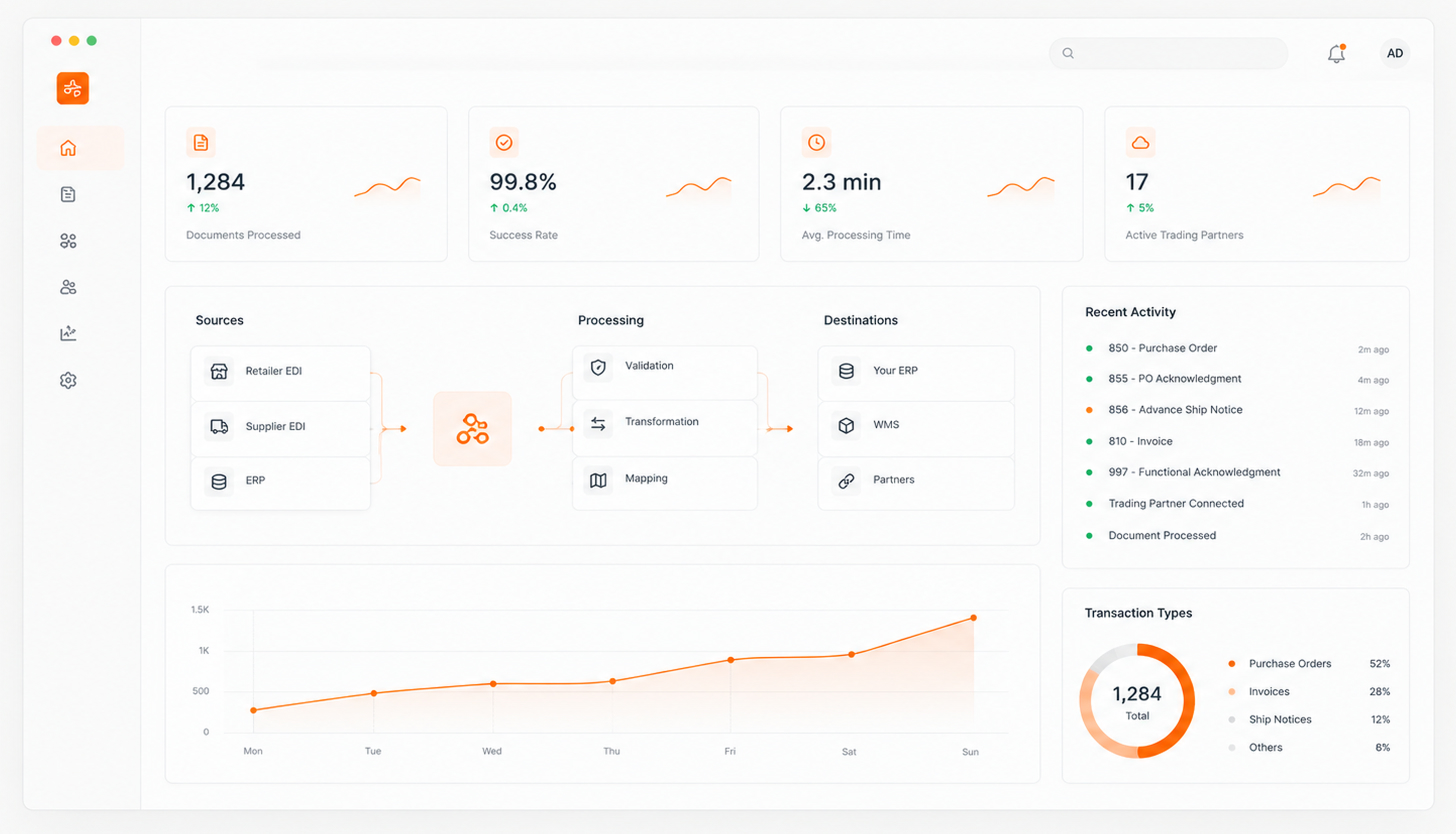
Your biggest retailer mandates EDI, your VAN bills per kilocharacter, and your ERP still gets a CSV someone re-keys. We build EDI integration services into the stack you already run — classic engineering, AI extraction, or low-code, chosen per component. Working prototype in 14 days.




A Full-Service Process for EDI Integration
EDI integration services connect your ERP to your trading partners X12 or EDIFACT documents — here is how a custom build runs.
Step 1
Partner & Spec Review
We collect every trading-partner spec you are held to — 850, 810, 856, 997 — and map them against what your ERP actually accepts. You leave the session with a document-by-document gap list, not a discovery deck.
Step 2
14-Day Prototype
One document type, end to end, on your real partner data — inbound 850 parsed, validated, and written into your ERP with a 997 back. Not a demo: the same architecture we harden for production, the same approach we use on every AI MVP build.
Step 3
Mapping & Exceptions
Maps for every partner and document, plus the exception queue that decides whether EDI works: rejected 997s, price and UOM mismatches, ASN timing failures. Routed to a person with the reason attached, not dumped in a log file nobody reads.
Step 4
Go-Live & Handover
We onboard partners in waves, starting with your highest-volume account, and watch live traffic before the next wave goes on. You receive the repository, the maps, the runbooks, and a monitoring dashboard — the same handover discipline behind our AI automation consulting engagements.
Proof Before
the Full Build
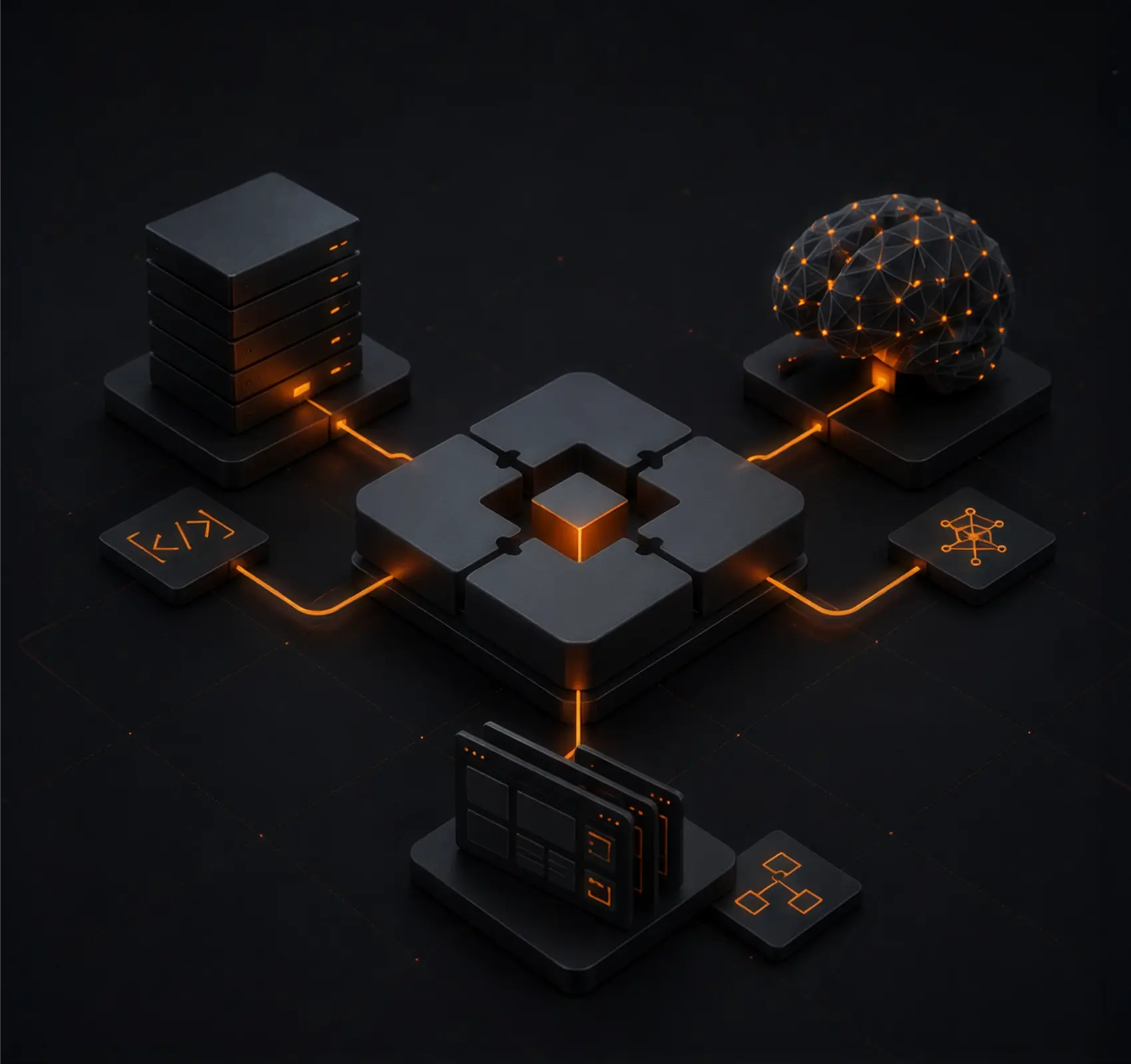
Before you sign for a full rollout, you see one real document flow end to end on your own partner data. If the extraction, the mapping, or the ERP write-back does not hold up, you find out in week two — for the price of a prototype, not a program.
The Closest Work We Have Published
We have not published an EDI case study yet. The nearest published work is the same discipline on the same kind of data: a procurement RFP pipeline that cut evaluation from 28 days to 72 hours on a $72,000 build, and a self-healing retail data pipeline that held 12% of margin.
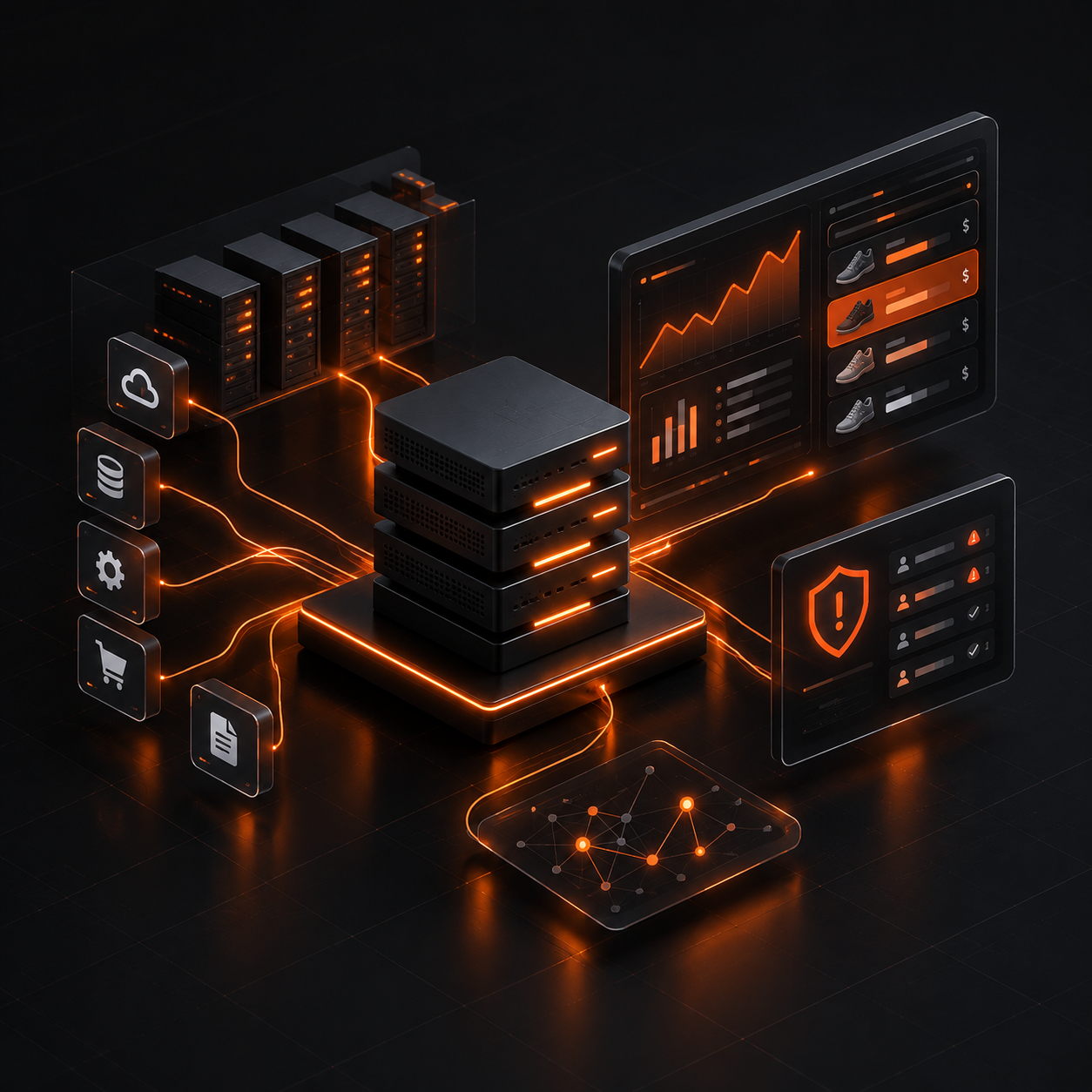

Every EDI pipeline runs inside your own cloud perimeter. Purchase orders, pricing, and customer addresses never leave it, and nothing you send through it trains a public model.

You own the repository, the maps, and the connectors. There is no per-document fee, no per-partner seat, and no platform holding your trading-partner relationships hostage if you decide to bring EDI in-house.

No junior bench learning X12 on your account. An integration specialist, an AI/ML engineer, and a solutions architect stay on the build from the spec review through partner go-live.

Adding partner number forty costs a fraction of partner number one, because the parsing, validation, and exception layers already exist. The same engine extends to invoices, remittances, and order acknowledgements.
EDI Integration Cost & Packages
Rapid Prototype
$12,000+
One document type with one trading partner, built and proven on your real data in about two weeks. Right if a retailer just handed you an EDI mandate and you need to know what a real build costs before committing budget.
What's included?
.svg)
Spec Review: one session mapping your partner’s guidelines against your ERP fields
Prototype Build: one inbound document parsed, validated, and written to your ERP
Stack Setup: Python and FastAPI foundation ready to extend into production
Findings Report: measured accuracy, gap list, and the fastest path to production
Production Build
$28,000+
A production EDI flow for one partner across your core document set, deployed with monitoring and a working exception queue. This is the tier most suppliers choose when one large retailer accounts for most of their order volume.
What's included?
Document Set: 850, 855, 856, 810 and 997 mapped both directions
ERP Write-Back: direct API integration with NetSuite, SAP, or QuickBooks
Exception Queue: rejects grouped by cause, aged, and routed to an owner
Security & Monitoring: private-cloud deployment with alerting on failed transmissions
Multi-Partner Build
$55,000+
Multi-partner EDI across your whole trading network, with AS2 and SFTP transport, a partner-onboarding workflow, and connections into more than one system of record. For distributors and manufacturers where EDI volume is the business.
What's included?
Partner Onboarding: a repeatable workflow your team runs without engineering help
Multi-System Integration: ERP, WMS, and e-commerce platforms connected to one pipeline
Compliance: SOC2/GDPR-aligned deployment with a full transaction audit trail
Team Training: runbooks and hands-on onboarding so your team operates it
Why Choose Building Agentic?
You could rent a VAN, brief an offshore team, or stitch together three contractors — or work with one accountable team that owns EDI end to end.

Right Tool Per
Component
Classic engineering for transport and audit, AI extraction for documents no template fits, low-code for the exception queue your team lives in.
One Accountable
Team
One solutions architect and integration specialist own your EDI build from spec review to partner go-live, with no handoffs between disconnected vendors.

No Per-Document Billing
You pay once to build it, then for hosting — not a kilocharacter fee that grows every time your order volume does.

Integration Is the Project
The ERP write-back that most EDI projects treat as an afterthought is where we start, because it is where they usually fail.


Industries We Build EDI For
EDI shows up wherever a larger partner sets the rules. These are the operations where we already run production systems, and where an EDI layer usually pays for itself fastest.
.png)

.png)
.png)





Frequently Asked Questions About SaaS Development Services
