


Ad Creative Automation With a Self-Hosted AI Model: From 4 Days to 20 Minutes
Industry: Fintech and advertising (bank-owned ad platform)
Project type: Creative automation platform: AI image generation for ad creatives on a fine-tuned open-source model, running on the company's own hardware
A large retail bank runs an advertising platform inside its own ecosystem. Partner brands launch offers there, and every offer needs a set of ad creatives. Designers produced those creatives, and each set took about four days. The bank built an ad creative automation tool on a fine-tuned open-source model that runs on its own servers. An operator uploads the partner's materials, presses a button and gets the images in about 20 seconds. A full cycle, including partner approval, now takes about 20 minutes.
Context: An Ad Platform Inside a Bank Ecosystem
Partners such as grocery chains launch offers on the platform. Typical mechanics: a discount of 20 percent on a basket above a minimum amount, or a cashback offer. The bank adds its own layer on top:
- It places media units across its ecosystem: the mobile banking app, the investment app and other surfaces.
- It retargets verified bank customers outside the bank through an ad network, using the same banners and the partner's offer.
- It can retarget buyers again with extra media on top of the partner's own offer.
Every offer therefore needs a set of images in many sizes and placements.
The Problem: Four Days of Design Per Launch
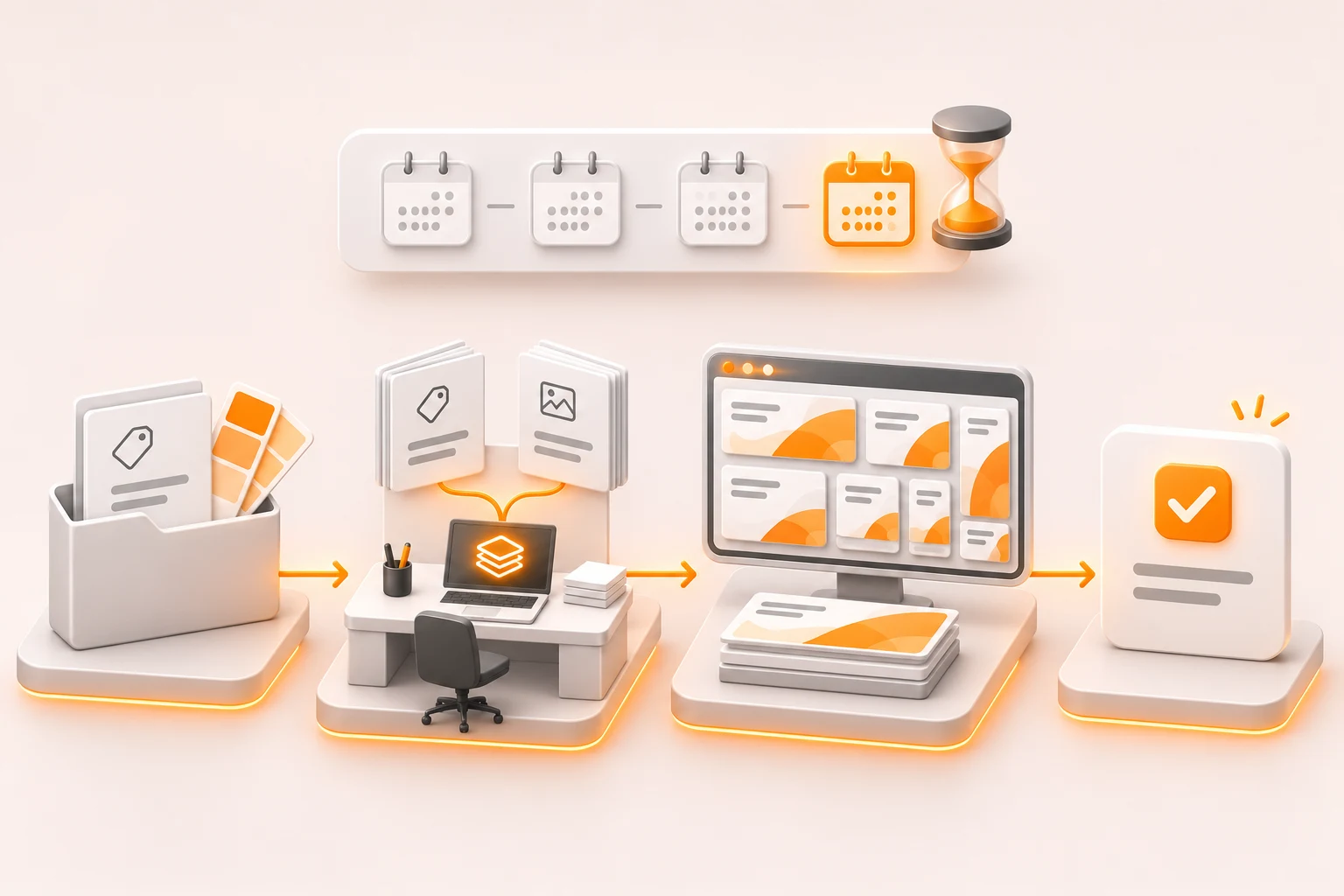
The old process followed the same steps every time:
- The partner sends a brief and source files. Its brand book and design code come with them.
- The bank's operations team combines them with the bank's own guidelines and brand book.
- Everything goes to in-house designers. They need about four days to produce the required images in line with both sets of guidelines.
- The partner approves the creatives, and the campaign launches.
The platform launches on the order of a thousand offers a month. Each creative carries a design cost, and the cost multiplies across every launch. Annual spend on creatives was large for the ad business. Four days of waiting also slowed every launch.
The Solution: A Fine-Tuned Image Generation Model
Turning Brand Guidelines Into Measurable Criteria
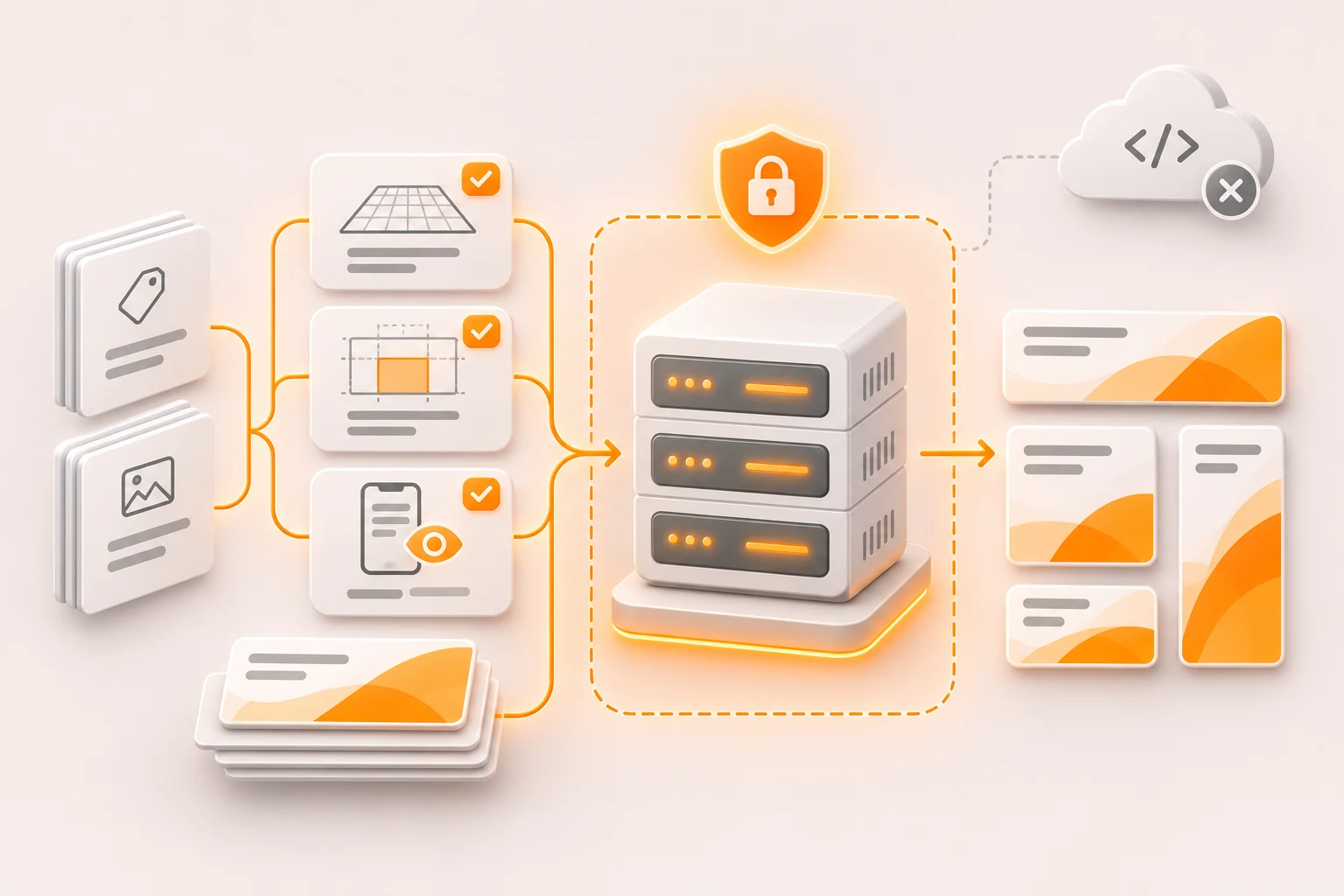
The team started with the source material: the partner examples and brand guides it had accumulated. It digitized the guides and wrote detailed quality criteria together with the designers. These are the same rules a designer applies by eye: the perspective of the image, where each element must sit, and whether the text stays readable on a small phone screen. An element that nobody can see on a phone is a real problem, because it hurts the bank-wide metrics for that placement.
Model Choice: Own Model Versus a Commercial API
Under the hood the team built several models and a wrapper that plugs them together. In a proof of concept it compared a leading commercial image model with an in-house one built on an open-source base model. It kept the in-house model. The team could adapt it faster and tune it more closely to the task, and the commercial model was not significantly better.
The open-source model runs on the bank's own servers. The team stripped it down to the task and fine-tuned it on the company's own dataset. Because the model starts clean, no unrelated requests reach it. The result is better on this one job, faster and cheaper to run.
A One-Button Operator Tool
The model sits behind a tool in the platform's admin panel. The operations team uploads the partner's materials and presses one button. In about 20 seconds the creatives appear. The operator sends them to the partner, who either approves them or asks for changes. A creative set that took four days now takes about 20 minutes end to end.

Scaling an On-Premise AI Model
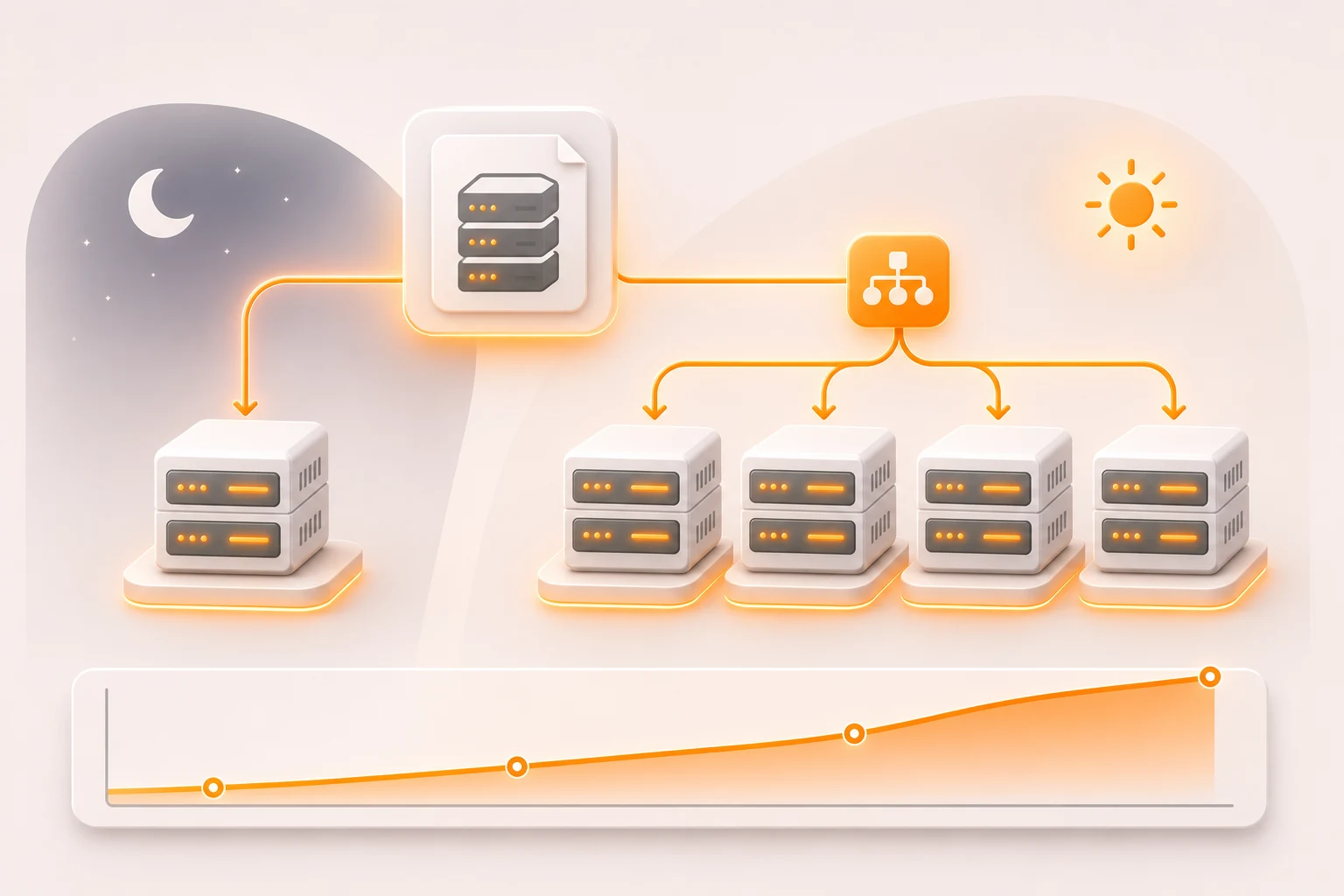
Load is handled with a standard pattern. The team saves a machine image of the model server. When the load grows, a second server starts automatically, then a third, and traffic is split across them. For example, one server can run at night and three or four at peak. This is also a cost saving, because the company pays only for the capacity it needs at that moment.
Why Self-Host: Data, Cost and Quality
- Data protection. The platform's internal numbers, metrics and parts of the data cannot be sent to an outside provider. That holds even under an enterprise contract, because nobody can guarantee who can see the data, and a leak brings legal and regulatory risk.
- Cost. A self-hosted model has no per-token fees. The bank pays to rent hardware and for electricity, and the same hardware runs any model it wants.
- Quality on a narrow task. A model fine-tuned on one task and one dataset works better, faster and at lower total cost than a general-purpose model that is asked to cover many tasks.
Results
- Turnaround from about 4 days to about 20 minutes per creative set. Generation itself takes about 20 seconds.
- Lower design cost on every launch. At about a thousand launches a month, the saving per creative becomes a visible line in the ad business's P&L.
- More campaigns per operator. One support specialist can run more campaigns in the same time.
- An effect that grows with the platform. The company plans to grow about tenfold over four years. The solution can be frozen in its current state and used for the next four years while savings scale with volume.
Operating Costs
- No per-token fees, since the model runs on the company's own infrastructure.
- Hardware rental and electricity are the running costs.
- Capacity follows the load, for example one server at night and three or four at peak.
Challenges
- The operator still does the rest by hand. Besides generating images, the operations team still collects the brief from the partner, checks the legal documents and prepares the offer for the partner's approval. These steps are the next candidates for automation.
- Hardware for the largest open models is expensive. Running one of the largest open-source models can take two machines at about $1 million each. The trend is toward compressed models that run on reasonable hardware, with a modest drop in quality.
- Self-hosting is not always the right call. A retailer with standard queries and no technology at its core is usually better off with a hosted model.
When to Self-Host an AI Model and When to Use an API
Start with external models to build an MVP. It is easy, fast and cheap, and it shows whether the idea has an effect. Our AI MVP development work usually starts this way.
Whether the model generates images or text, the logic is the same. The choice between an API and a self-hosted LLM, or an on-premise LLM, comes down to the conditions below.
Move to your own model when these conditions hold:
- Volume and load are high, and the effect scales with them.
- Data cannot leave the company because of security or regulation.
- The task is narrow and you have a large history of examples to train on.
On quality, the best commercial models usually lead public benchmarks, typically by up to about five percent over a good open-source model. On a narrow task that gap disappears once the open-source model is fine-tuned on a large set of real examples. A commercial model that gets only a few examples in the prompt will do worse on that task than a well fine-tuned open-source model.
Where a Fine-Tuned Model Applies
The pattern is: a large archive of past examples, a narrow repeatable task, and a model trained on it. Beyond ad creatives, it fits:
- Document generation. Legal documents and other structured documents built from a set of reference documents.
- Customer support. An on-premise LLM fine-tuned on a very large archive of past requests that answers incoming ones.
- Voice support. Voice generation and handling for the most basic support requests.
- Logistics. Route building and similar calculations over a fixed set of variations.
- Internal review bots. The bank trained a bot on several thousand product one-pagers. A product manager drops in a new one-pager and gets feedback on what is missing, such as the problem, the experiments, the rollout, the financial impact and the metric affected.
- Sales copilots. A copilot, now in development, takes a partner brief and proposes mechanics, a budget split and expected conversion based on past launches.
If you are weighing this kind of build, our AI development services cover model selection, fine-tuning and deployment.
Related Case Studies
- Automating License Plate Recognition for a Traffic Enforcement System
- AI Demand Forecasting and Dynamic Pricing for a Ride-Hailing Platform
About the Author
Alexander Soldatov — Product Lead, Building Agentic
Ten years in product leadership at Yandex, AliExpress, and Tinkoff. Built Yandex.Scooters operations from zero and scaled the team to 23 specialists; led Yandex.Shuttle; ran cross-border logistics products at AliExpress, launching China and Turkey corridors that delivered 3.5% GMV growth and 25% faster order fulfillment. At Building Agentic he owns hypothesis validation and MVP scoping — deciding what gets built first and what gets cut.
Alexander Soldatov on LinkedIn
