
SaaS Development Services That Ship Fast
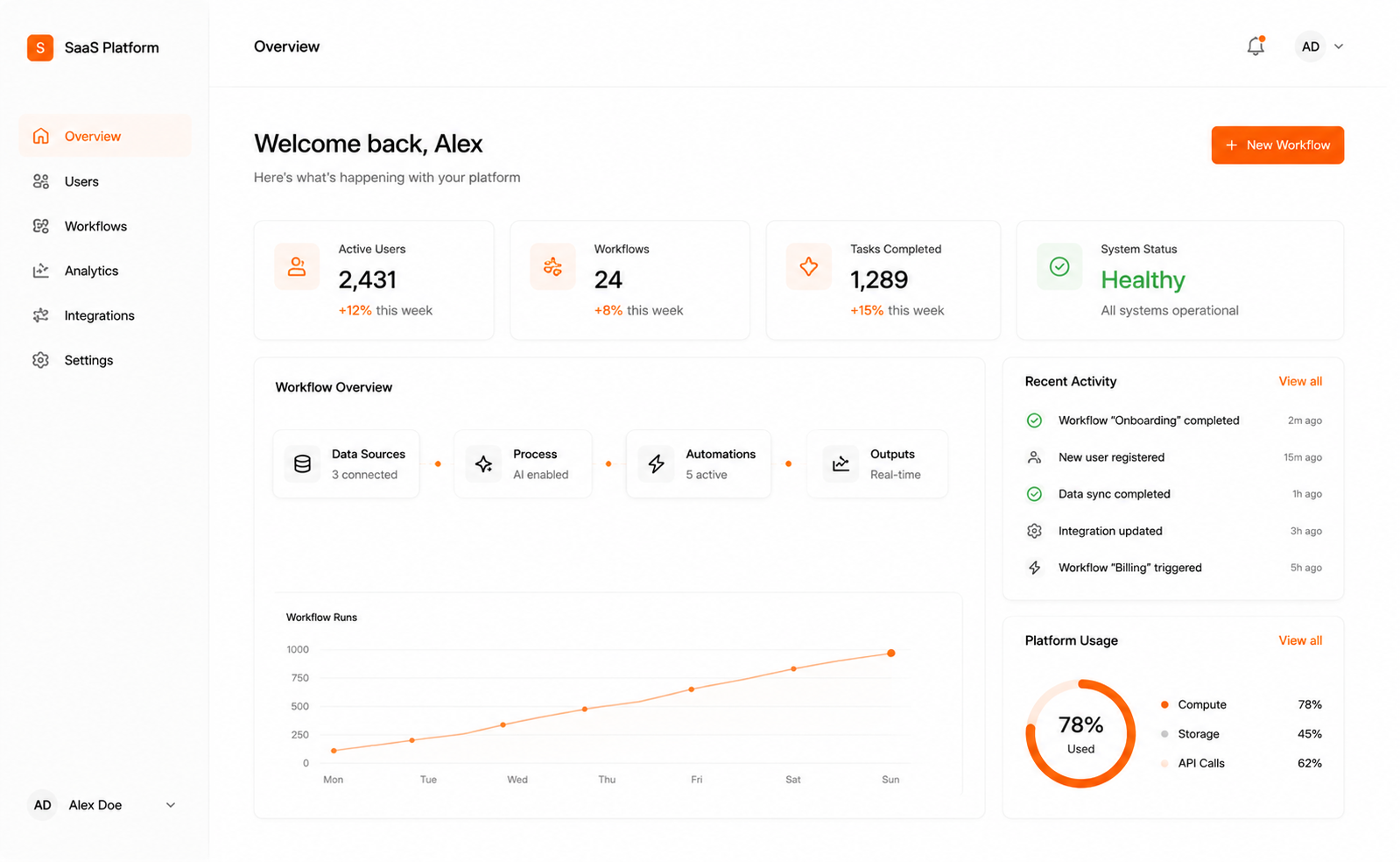
Your operation runs on spreadsheets and rented subscriptions that almost fit. We know that trap. Building Agentic delivers SaaS development services that put working software on your real data in 14 days — a platform built around your workflow, in production code you own outright.


A Full-Service Process for Your SaaS Launch
From the first architecture call to a multi-tenant platform live on your infrastructure — here is exactly how we get you there.
Step 1
Discovery & Scope
We map your idea against real constraints in one working session — your data, your users, and the single workflow worth building first. If a pilot already stalled somewhere, our AI automation consulting team diagnoses why before anyone writes code.
Step 2
14-Day Prototype
You get working software on your real data within two weeks, not a clickable mockup. It runs on the same architecture — Python, FastAPI, PostgreSQL, frontier LLMs — that carries into production, so nothing you approve in week two gets thrown away later.
Step 3
Production Build
Once the prototype proves the case, we harden it: multi-tenancy, roles and permissions, billing hooks, monitoring, and clean API integration with your existing stack. The reporting layer uses the same discipline as our AI analytics and BI builds.
Step 4
Launch & Iterate
We ship to your users, watch real usage data, and hand you a prioritized roadmap for the next release. You own the repository, the schema, and every line of code, so your next iteration never waits on our calendar.

Working Software,
Not Wireframes
Custom SaaS development does not start with a deck of mockups. From week two you get a live application running on your own data, with a recorded walkthrough your whole team can react to before a single production line is written. It is the same discipline behind our AI MVP development work.
Platforms We Have Actually Shipped
We have not published a multi-tenant SaaS product case study yet. What we can show is the same engineering on real production systems: a competitor price tracking platform live in six weeks that held 12% of retained margin, and a return fraud scoring system shipped in four weeks that cut abusive returns 38%.


Every build runs inside your private cloud perimeter from day one. Your customer records and business logic never train a public model, and nothing about your product becomes someone else’s roadmap.

You own the repository, the database schema, and the deployment scripts. If you hire an in-house team next year, they inherit clean code — not a proprietary platform holding your product hostage.

No junior bench rotating through your build. Backend architects, AI/ML engineers, and a domain analyst stay on your project from the scoping call through launch and handover.

Tenant isolation, role-based access, usage metering, and billing hooks are designed in from the first sprint. Your platform scales to a hundred accounts without the rewrite most rushed SaaS builds require.
SaaS Development Cost & Packages
Validation Sprint
$18,000+
A single-workflow SaaS prototype built and validated on your real data in about two weeks. Right for founders and operations leads testing one core hypothesis before committing a larger engineering budget.
What's included?
.svg)
Scope & Architecture: one working session to define the workflow worth proving first
Prototype Build: functional application on your real data, not a clickable mockup
Stack Setup: Python, FastAPI, and PostgreSQL foundation ready to extend into production
Findings Report: what worked, what did not, and the fastest path forward

SaaS MVP Launch
$45,000+
A production-ready SaaS application covering your core user flow, deployed to real customers with authentication, monitoring, and one live integration. This is the tier most SMB and mid-market teams choose to validate before funding a full platform.
What's included?
Everything in Validation Sprint: hardened for real users and real traffic
Integration: secure API connection to one existing system such as your CRM
Security & Monitoring: production deployment in your private cloud with alerting
Scaling Roadmap: a prioritized plan for the next build phase
Multi-Tenant Platform
$85,000+
A full-scope SaaS platform spanning multiple workflows, tenant isolation, role-based permissions, and billing. Engineered for a commercial launch and built to carry paying accounts from day one without a rewrite.
What's included?
Everything in SaaS MVP Launch: extended across multiple user roles and workflows
Multi-System Integration: connections to your CRM, ERP, or e-commerce stack
Compliance: SOC2/GDPR-aligned deployment practices and a documented data processing model
Team Training: hands-on onboarding so your team can operate and extend it
Why Choose Building Agentic?
You could hire a freelancer, brief an offshore team, or stitch together contractors — or work with one accountable team that owns your custom SaaS development end to end.

Right Tool Per
Component
We choose classic engineering, AI, or low-code per component — the right engineering approach for each part, not the same hammer for every nail.
One Accountable
Team
You work with one accountable SaaS development company, not three contractors: solutions architects and senior engineers own your build from scoping through launch.

Production From
Day One
Your prototype runs on the architecture that carries into production, so a validated idea never gets rebuilt from scratch three months later.

Fixed Scope,
Public Pricing
You see the package, the price, and the timeline before you book a call — no discovery theatre and no six-figure surprise in month three.



Industries We Build SaaS Platforms For
The same build approach applies across the industries where we already run production AI systems — teams that outgrew spreadsheets and vendor subscriptions but are nowhere near ready for a six-figure enterprise suite.








Frequently Asked Questions About SaaS Development Services
