
Agentic AI Development Company That Ships in Weeks
Your team is drowning in multi-step manual work — RFP triage, invoice matching, returns review — and every agentic AI vendor wants a six-figure platform contract first. We build agents you own, on your data, in your cloud. Working prototype in 14 days.

.webp)



A Full-Service Process for Agentic AI Deployment
From the first architecture call to autonomous agents running inside your private cloud — here is exactly how the build works.
Step 1
Architecture Audit
We map your workflows, data, and systems of record, then rank them by how much an agent can actually recover. You leave with an opportunity map and ROI estimates per workflow — not a proposal. This is the same diagnostic we run in our AI automation consulting engagements.
Step 2
14-Day Prototype
Within two weeks you get one working agent running on your real data — reading your documents, calling your APIs, making the decision you actually care about. It runs on the same Python and FastAPI rails that carry into production, so nothing gets thrown away.
Step 3
Production Hardening
We wire the agent into SAP, Coupa, NetSuite, Shopify, or your legacy ERP, then add retries, fallbacks, evaluation harnesses, and monitoring. Deployment happens inside your private cloud perimeter under SOC 2 and GDPR-aligned controls, so your data never trains a public model.
Step 4
Guarded Activation
Agents go live behind approval gates your team controls, and earn autonomy workflow by workflow as measured accuracy justifies it. That is exactly how our self-healing pricing agent was activated for a mid-market retailer — see the case study before you decide.
Working Agents,
Not Agent Demos
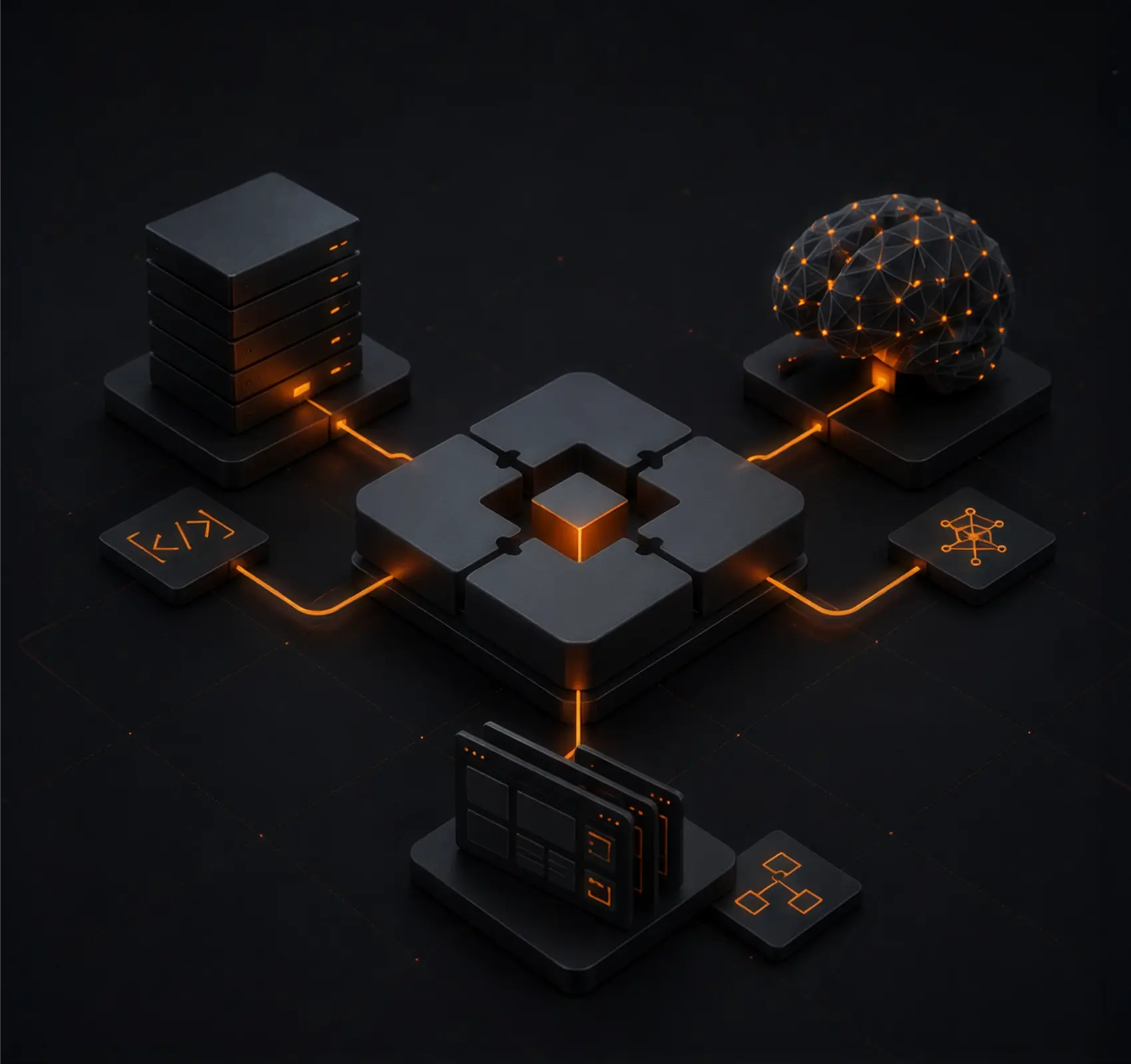
Agentic AI development means software that plans a multi-step task and executes it — reading the RFP, matching the invoice — not a chatbot that answers. Most vendors ship a framework diagram and a sandbox pilot. We pick classic code, LLM agents, or low-code per component: the right tool, not the same hammer for every nail.
Agents Already Running in Production
For a mid-market retailer we shipped a self-healing pricing agent that reads competitor catalogs by meaning, not markup: +12% retained margin, ~99% monitoring uptime, repricing latency cut from 2–4 days to under an hour, live in six weeks. A DTC brand’s return-scoring agent cut fraudulent returns 38%.
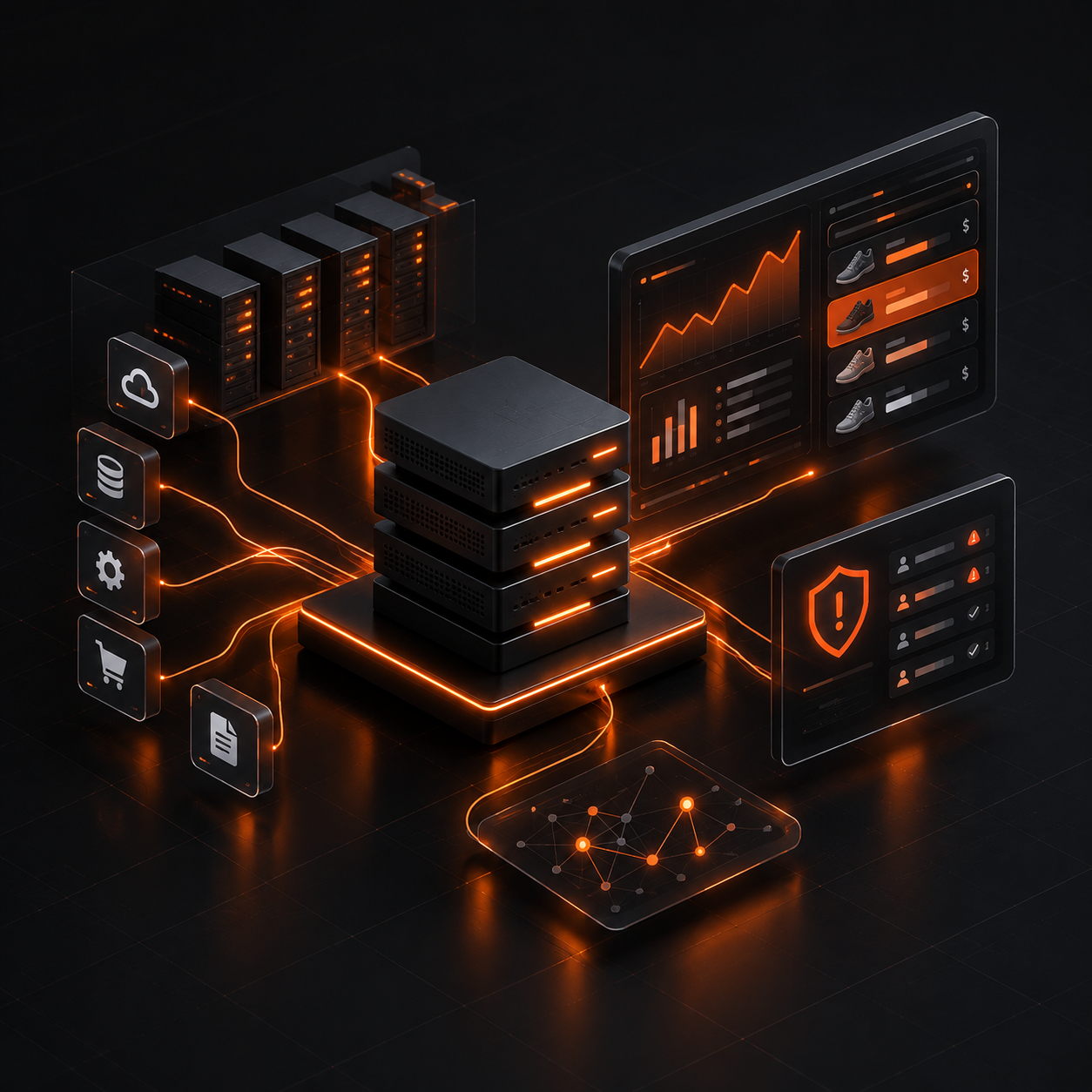

Every agent runs inside your private cloud perimeter under SOC 2 and GDPR-aligned practices. Your documents, pricing, and customer records never leave your control and never train a public model.

You own the repository, the prompts, the orchestration logic, and every integration we write. There is no proprietary agent platform, no per-seat licence, and nothing stopping you from taking the build in-house.

No junior bench rotating through your build. A solutions architect, an AI/ML engineer, an integration specialist, and a security engineer stay on your agentic AI project from the audit call through handover.

Your first agent is built on the same stack that carries a full autonomous operations layer — the same rails behind our AI MVP development work — so adding the second workflow is an extension, not a rebuild.
Agentic AI Development Cost & Packages
Agent Prototype
$15,000+
One agent, one workflow, built and validated on your real data in about two weeks. The right entry point if you need proof that agentic AI works on your documents before committing a larger engineering budget.
What's included?
.svg)
Scope & Architecture: one working session to pick the highest-value agent workflow
Agent Build: functional agent on your real data, not a scripted demo
Stack Setup: Python, FastAPI, and LangChain foundation ready to extend
Findings Report: measured accuracy, failure modes, and the fastest path to production
Production Agent
$45,000+
A single agent hardened for daily production use, integrated with one system of record, deployed in your private cloud with monitoring and approval gates. This is the tier most mid-market operations teams start with.
What's included?
Everything in Agent Prototype: rebuilt on production rails for real daily volume
Integration: secure API connection to one system — ERP, CRM, or storefront
Guardrails: approval queues, retries, fallbacks, and an evaluation harness
Scaling Roadmap: a prioritized plan for the next two agent workflows
Agentic Operations
$75,000+
A multi-agent layer spanning several workflows and systems, with orchestration, shared memory, and human-in-the-loop governance across the whole chain. Built for teams replacing a genuine operational bottleneck, not testing an idea.
What's included?
Everything in Production Agent: extended across multiple connected agent workflows
Multi-System Integration: SAP, Coupa, NetSuite, Shopify Plus, and legacy ERPs
Compliance: SOC 2 and GDPR-aligned deployment inside your own perimeter
Team Training: runbooks and hands-on onboarding so your team operates it
Why Choose Building Agentic?
You could hire a freelancer with a LangChain tutorial, brief an offshore team, or buy a six-figure agent platform — or work with one accountable engineering team.

The Right
Hammer
We pick classic engineering, LLM agents, or low-code per component, so you pay for reliability where it matters and speed where it doesn’t.
One Accountable
Team
A single team of solutions architects and AI engineers owns your agent build from the audit call through handover — no contractor relay race.

Production From Day One
Your prototype runs on the architecture that carries into production, so a validated agent scales instead of getting rebuilt from scratch.

Priced for
Mid-Market
Engagements start at $15,000 and land in weeks, not the six-figure multi-quarter rollouts enterprise agentic AI vendors quote by default.


Industries We Build AI Agents For
Agentic AI pays back fastest where high-frequency, low-value decisions eat your team’s week. These are the operational areas where we already run production agents for US mid-market companies.
.png)

.png)






Frequently Asked Questions About Agentic AI Development
