


A Full-Service Process for AI App Delivery
AI app development means software where the intelligence — extraction, scoring, reasoning — is the product, not a plugin. Here is how we build it.
Step 1
Architecture Audit
We map your workflow, data, and existing stack in one working session, then rank automation opportunities by payback speed. You leave with an opportunity map and a clear answer on which parts of the app should be classic code, AI, or low-code.
Step 2
14-Day Prototype
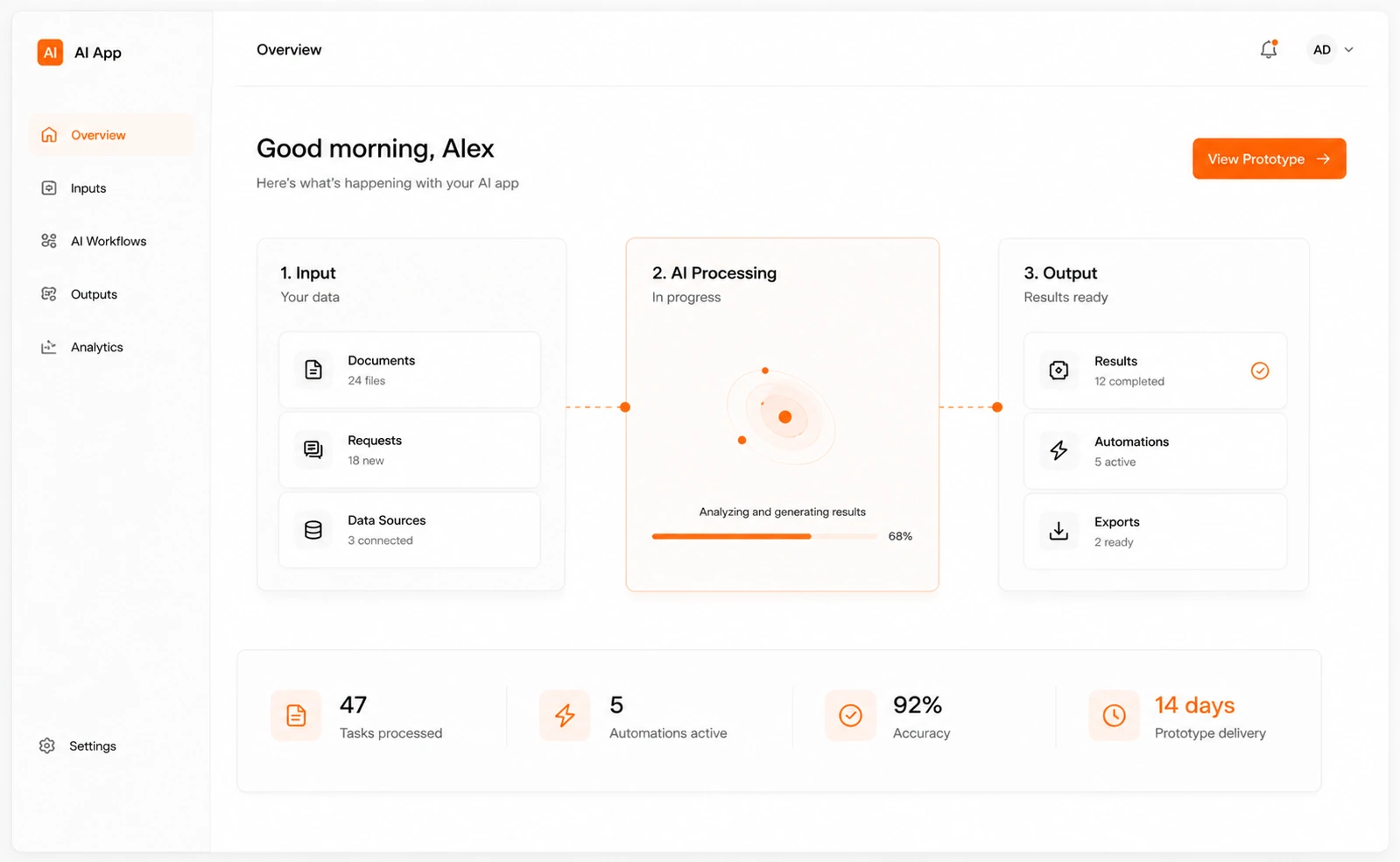
Within two weeks you get a working application running on your real data — not a clickable mockup. It runs on the same Python and FastAPI architecture that carries into production, which is why our AI MVP development engagements never throw the prototype away.
Step 3
Production Build
We harden the prototype into a real application: authentication, monitoring, error handling, and secure API integration with the ERP, CRM, or storefront you already run. Everything deploys inside your private cloud, under SOC2/GDPR-aligned practices, so your data never trains a public model.
Step 4
Launch and Scale
We ship to your users, train your team, and hand over the repository plus a scaling roadmap. Where the app needs an analytics layer, we extend it with AI analytics and business intelligence rather than bolting on another dashboard subscription.
Not the Same Hammer Every Time
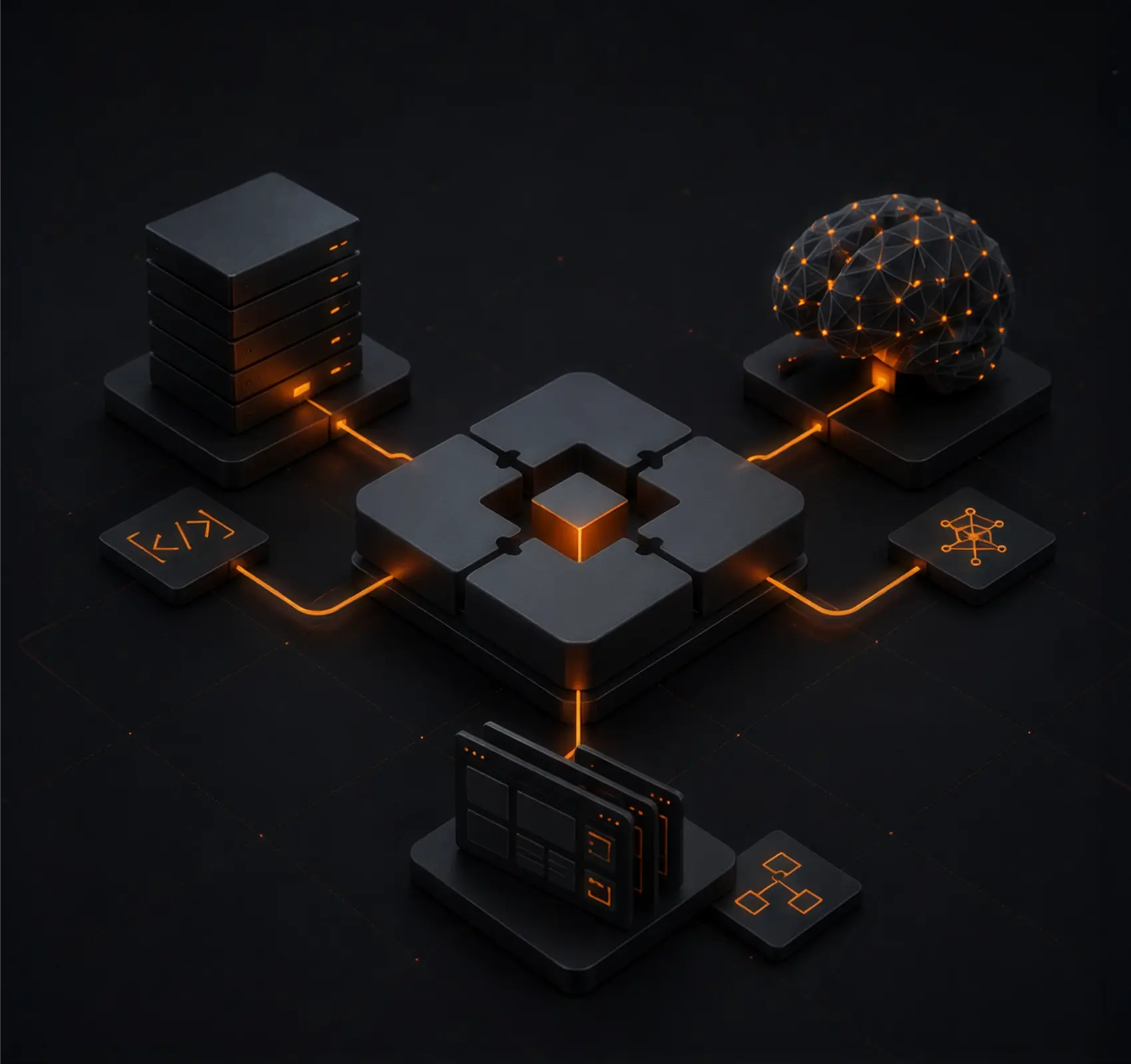
Most AI app development companies sell you one stack. We choose per component: classic engineering where reliability is non-negotiable, generative AI where intelligence is the product, and low-code orchestration where speed wins. That mix is why a working app costs weeks instead of quarters — and why your budget goes into the parts that matter.
Apps We Have Actually Shipped
For a mid-market retailer we built self-healing competitor price tracking software with its own control dashboard — live in six weeks, +12% retained margin on tracked categories, repricing latency down from 2–4 days to under an hour. A DTC brand’s return-fraud scoring app shipped in four weeks and cut abusive returns 38%.


Every AI app we build runs inside your private cloud perimeter, under SOC2/GDPR-aligned practices. Your customer records, pricing logic, and proprietary data never leave your environment and never train a public model.

You own the repository, the architecture, and every line we write. There is no proprietary platform, no per-seat license, and no vendor holding your application hostage if you decide to take it in-house.

No junior bench rotating through your build. AI/ML engineers, backend architects, and a domain analyst stay on your project from the scoping call through launch and handover.

Your app runs on the same Python, FastAPI, and PostgreSQL stack behind our enterprise deployments. Adding a second workflow or a tenth integration is an extension, not a rebuild from zero.
AI App Development Cost & Packages
Proof of Concept
$15,000+
A single-workflow AI application built and validated on your real data in about two weeks. Best for SMB teams that need internal proof the idea works before committing a larger engineering budget.
What's included?
.svg)
Scope & Architecture: one session to pick the highest-value workflow to prove
Prototype Build: functional app on your real data, not a clickable mockup
Stack Setup: Python and FastAPI foundation ready to extend into production
Findings Report: what worked, what failed, and the fastest path forward
Production App
$40,000+
A production-ready AI application covering your core workflow, deployed to real users inside your private cloud with monitoring and one live system integration. This is the tier most US SMB and mid-market teams choose.
What's included?
Everything in Proof of Concept: hardened, tested, and released to real users
Integration: secure API connection to one existing CRM, ERP, or storefront
Security & Monitoring: private-cloud deployment with logging, alerting, and access control
Scaling Roadmap: prioritized plan and cost estimate for the next phase
Multi-Workflow Build
$75,000+
A full-scope AI application spanning several workflows and systems, engineered to carry production load from launch day. Comparable in scope to our 72,000 procurement and analytics deployments, and built for teams replacing an expensive enterprise SaaS contract.
What's included?
Everything in Production App: delivered across multiple connected user workflows
Multi-System Integration: connections into your CRM, ERP, and e-commerce stack
Compliance: SOC2/GDPR-aligned deployment, audit logging, and data processing agreement
Team Training: hands-on onboarding so your staff can operate and extend it
Why Choose Building Agentic?
You can hire a freelancer, brief an offshore team, or stitch together three contractors — or work with one accountable US-facing team that owns the outcome end to end.

Right Tool Per
Component
We pick classic engineering, generative AI, or low-code for each part of your app, so you are not paying custom rates for a dashboard.
One Accountable
Team
A single team of solutions architects and AI engineers owns your build from the scoping call through launch, with no handoffs.

Production From
Day One
Your prototype is built on the architecture that carries into production, so a validated app is extended rather than rewritten from scratch.

You Own
Everything
The repository, the prompts, and the infrastructure config are yours at handover, with no proprietary layer sitting between you and your own product.


Industries We Build AI Apps For
The same build approach applies across the sectors where we already run production AI systems. If your industry is not listed, the audit will tell you honestly whether an AI app is the right answer.






Frequently Asked Questions About AI App Development
