
Custom Software Development Company for Growing Businesses
You've outgrown the SaaS subscriptions and spreadsheets, but a six-month agency build is a bet you can't afford. We're a custom software development company that picks classic engineering, AI, or low-code per component — and puts a working prototype on your real data in 14 days.



A Full-Service Process for Custom Software Delivery
From the first architecture call to a production system your team owns — here's exactly what happens at each stage.
Step 1
Architecture Audit
We map your workflows, data, and existing stack, then rank automation opportunities by payback speed. You leave with an opportunity map and ROI estimates by workflow — before anyone writes code or quotes you a number. This is the same audit that opens every AI automation consulting engagement.
Step 2
Stack & Data Mapping
We trace how data actually moves through your ERP, CRM, and storefront, then define the integration architecture in writing. Every handoff is specified before build starts, which is why our custom software development projects don't stall at the legacy-integration wall most pilots die on.
Step 3
14-Day Prototype
Two weeks in, you get a functioning system running on your real data — not a clickable mockup. It runs on the same Python, FastAPI, and PostgreSQL foundation that carries into production, so nothing gets thrown away when you green-light the full build.
Step 4
Deploy & Hand Over
We harden the system inside your private cloud, wire in monitoring, train your team, and hand over the repository and documentation. You own the code outright. See how this played out in six weeks for a mid-market retailer in our price tracking case study.
The Right Tool for Each Component
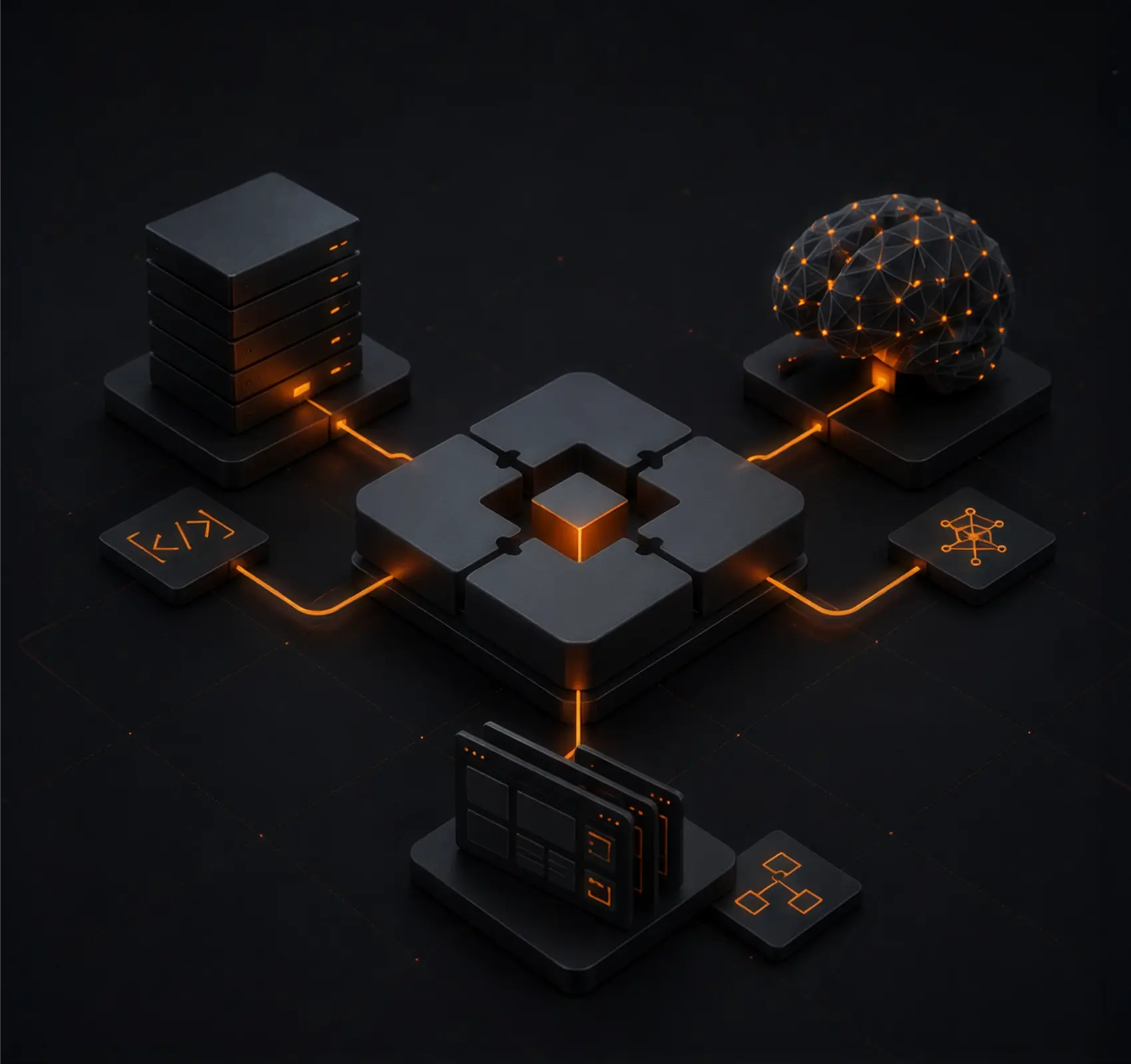
Custom software development means building a system around your business logic instead of adapting your operations to someone else's platform. Most agencies sell one methodology. We choose per component: classic engineering where reliability is non-negotiable, generative AI where intelligence is the product, low-code orchestration for the dashboards your ops team uses daily.
Systems We've Actually Shipped
A mid-market home & lifestyle retailer replaced a scraper that broke weekly with custom price-tracking software: +12% retained margin on tracked categories, repricing latency down from 2–4 days to under an hour, live in six weeks. A DTC apparel brand cut fraudulent returns 38% and protected $180K in margin.
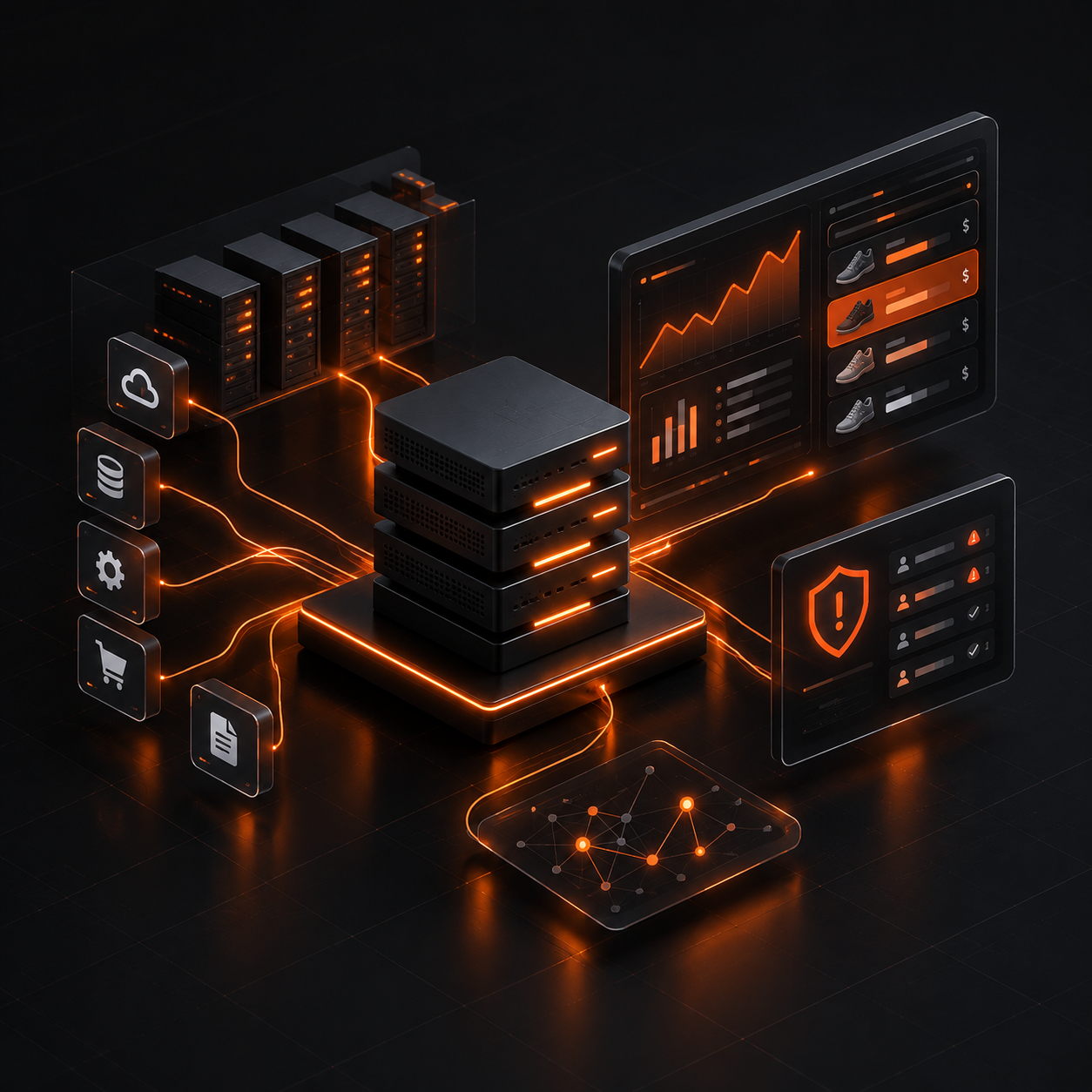

Every build runs inside your private cloud perimeter under SOC2/GDPR-aligned practices. Your proprietary pricing, customer records, and vendor terms never leave your environment and never train a public model.

You get the repository, the architecture, and the documentation at handover. No proprietary platform, no per-seat licence, no vendor lock-in — take the code in-house whenever it makes sense for you.

No junior bench rotating through your project. A solutions architect, backend engineer, integration specialist, and domain analyst work your build from the scoping call through handover — the same people, start to finish.

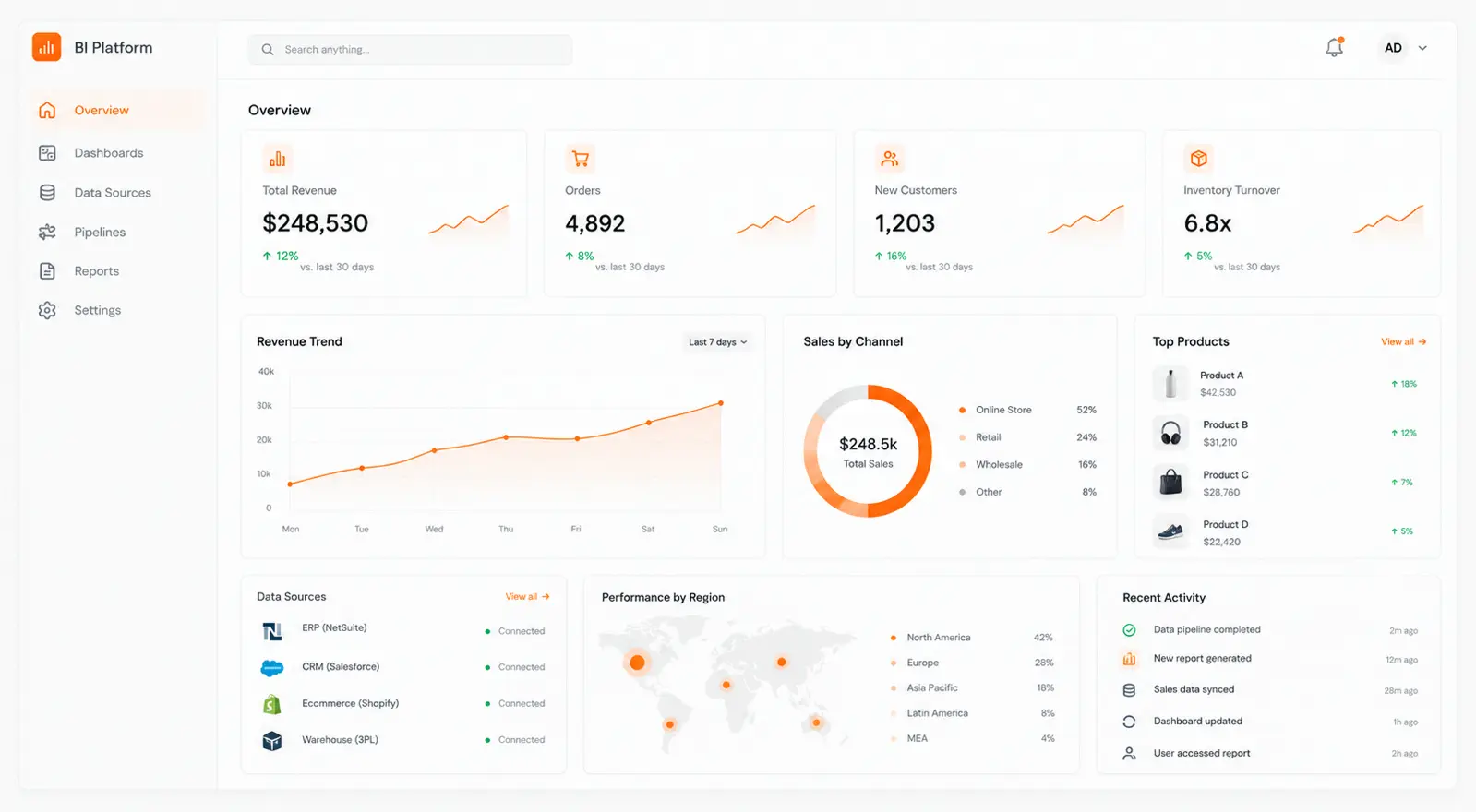
Your first workflow ships on the same production stack we use for enterprise builds, so the analytics and BI layer you add next extends it instead of replacing it. Growth never means a rewrite.
Custom Software Development Cost & Packages
Proof Build
$12,000+
A single high-value workflow, built and validated on your real data in about two weeks. Best for SMB teams who want proof that custom software beats their current spreadsheet-and-SaaS workaround before committing a larger budget.
What's included?
.svg)
Scope & Architecture: one working session to define the workflow worth proving first
Working Prototype: functional system on your real data, not a clickable mockup
Stack Setup: Python/FastAPI foundation ready to extend straight into production
Findings Report: what worked, what didn't, and the fastest path forward
Production Build
$35,000+
One complete business process in production: integrated with a live system of record, monitored, and running for real users. This is the tier most US small and mid-market companies choose for their first custom software development project.
What's included?
Everything in Proof Build: hardened, tested, and deployed for real daily use
System Integration: secure API connection to one core platform — ERP, CRM, or storefront
Security & Monitoring: private-cloud deployment with logging, alerting, and failure handling
Handover Package: repository, documentation, and a prioritized roadmap for phase two
Multi-System Platform
$75,000+
A multi-workflow system spanning several integrations and user groups, engineered for enterprise-level load from day one. Chosen by mid-market operators replacing a six-figure SaaS suite or consolidating three disconnected tools into one owned platform.
What's included?
Everything in Production Build: extended across multiple workflows and user roles
Multi-System Integration: SAP, Coupa, NetSuite, Shopify Plus, Amazon, or legacy ERPs
Compliance: SOC2/GDPR-aligned deployment, audit logging, and role-based access control
Team Training: hands-on onboarding so your team operates and extends it
Why Choose Building Agentic?
You could hire a freelancer, brief an offshore team, or stitch together three contractors — or work with one senior team that owns the outcome end to end.

Hybrid by Design
We choose classic engineering, AI, or low-code per component, so you pay for reliability where it matters and speed where it doesn't.

Proof in 14 Days
You see a working system on your own data within two weeks, so the go/no-go decision rests on evidence rather than a proposal.

One Accountable Team
A single senior team carries your build from scoping through handover, with no mid-project handoffs between disconnected contractors or offshore delivery pods.

No Vendor Lock-In
You own the repository, the architecture, and the data, so switching partners or bringing the work in-house never means starting over.


Industries We Build Custom Software For
We work where operational complexity outgrew off-the-shelf tools but a six-figure enterprise platform still makes no sense — mid-market operators, e-commerce brands, and B2B procurement teams across the United States.






Frequently Asked Questions About Custom Software Development
