

%20(1).webp)


A Full-Service Process for Legacy System Modernization
From the first audit call to a modernized system in production — here is exactly how your legacy stack gets rebuilt.
Step 1
Modernization Audit
We map your legacy codebase, data flows, and integrations, then rank every component by business risk and cost of delay. You leave with an opportunity map that separates what to rewrite, what to wrap with an API, and what to leave alone.
Step 2
Stack & Data Mapping
Before anything gets rebuilt, we document how data actually moves between your ERP, CRM, and homegrown tools — including the undocumented jobs nobody wants to touch. That map becomes the integration spec your modernized system is built against.
Step 3
14-Day Prototype
You see the modernized slice running on your real data inside two weeks — not a mockup, not a slide. It runs on the production architecture, so the prototype becomes the foundation instead of throwaway work. This is the same discipline behind our AI MVP development.
Step 4
Cutover & Handover
We migrate in guarded stages — old and new running in parallel until the numbers match. Then we train your team, hand over the repository, and leave you with runbooks. Read the case to see the same staged cutover on a live retail system.
The Right Tool Per Component
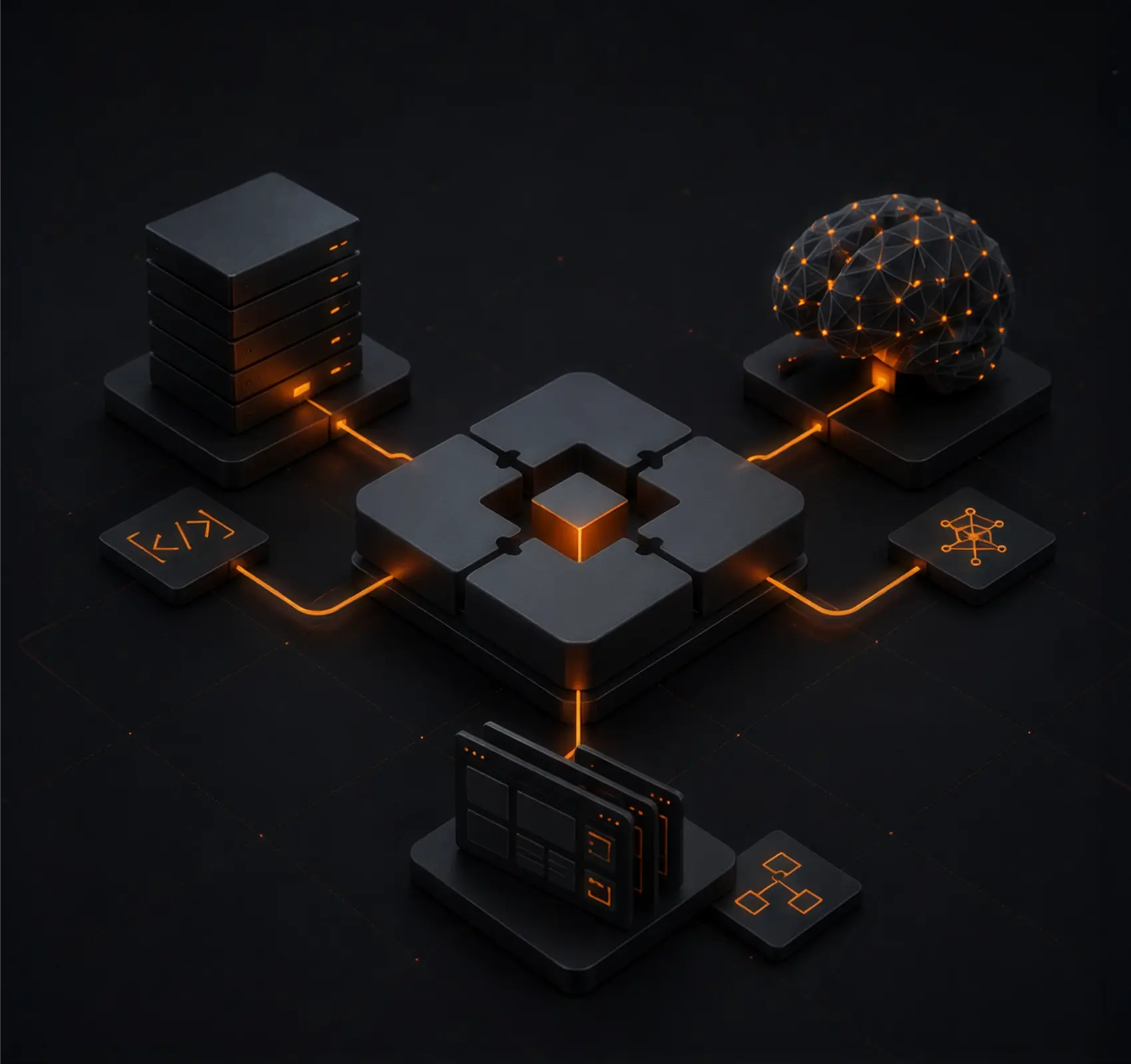
Most modernization vendors sell you one answer: a full custom rewrite, or a migration onto their platform. We decide per component. Compliance-critical and financial paths get classic, auditable engineering. Unstructured data and document logic get AI. Internal dashboards and workflows get low-code. That is how a modernization budget stops doubling.
Systems We’ve Actually Replaced
We have not published a case study labelled legacy modernization yet — but the work is the same. For a mid-market retailer we replaced a brittle HTML scraper that broke weekly with a self-healing system: ~99% monitoring uptime, repricing latency down from 2–4 days to under an hour, live in six weeks.


Every line we write on your modernization lands in your repository under your license. No proprietary runtime, no platform subscription, no vendor standing between you and the system that runs your business.

Modernization means touching your most sensitive records. Everything runs inside your private cloud perimeter under SOC2/GDPR-aligned practices, and none of your data is ever used to train a public model.

Legacy code punishes junior guesswork. Your modernization is staffed by backend architects, AI/ML engineers, and a domain analyst from the audit call through cutover — no rotating bench, no handoff to a cheaper team.

We modernize onto Python, FastAPI, and PostgreSQL — a stack your next hire already knows. The system you get is one your in-house team can extend without calling us back for every change.
Software Modernization Cost & Packages
Modernization Audit
$3,000+
A fixed-scope assessment of your legacy system, delivered in about two weeks. You get a component-by-component opportunity map, risk ranking, and a costed modernization roadmap you can act on with us or without us.
What's included?
.svg)
Code & Stack Audit: legacy codebase, dependencies, and technical debt mapped
Data Flow Map: how records actually move between your existing systems
Risk Ranking: every component scored by business risk and cost of delay
Costed Roadmap: phased plan with budget and timeline per modernization slice
Core Modernization
$25,000+
The tier most mid-market teams choose. We rebuild your highest-risk system — the one blocking releases or failing audits — migrate its data, integrate it with your current stack, and cut over in guarded stages with no downtime.
What's included?
Everything in Modernization Audit: carried straight into the build, no re-discovery
Rebuild & Migration: one core system rewritten and its data migrated
Integration: secure API connections to your ERP, CRM, or e-commerce platform
Guarded Cutover: parallel running, reconciliation, rollback plan, and team handover
Full Platform Rebuild
$55,000+
A multi-system modernization program for teams retiring an entire legacy platform. Several workflows rebuilt in sequence, cross-system data migration, compliance-grade deployment, and a trained internal team able to own the result after handover.
What's included?
Everything in Core Modernization: applied across multiple connected workflows
Multi-System Integration: ERP, CRM, e-commerce, and warehouse systems connected
Compliance: SOC2/GDPR-aligned deployment inside your private cloud perimeter
Team Enablement: training, runbooks, and a roadmap your engineers can execute
Why Choose Building Agentic?
Hand your legacy system to an offshore body shop or a platform vendor who wants to replatform you — or work with one accountable team.

Hybrid by Design
We choose classic engineering, AI, or low-code per component, so you pay rewrite prices only where a rewrite is actually warranted.

One Accountable Team
The architects who audit your legacy system are the same engineers who rebuild and cut it over, with no handoffs in between.

Proof Before Budget
You see a working slice of the modernized system on your real data in 14 days, before the large build is approved.

No Vendor Lock-In
You own the repository, the architecture, and the data, so nothing forces you to keep paying us after the system ships.



Industries We Modernize Legacy Systems For
Legacy pain looks different in every vertical. These are the operations where we already run production systems, and where a modernization project pays for itself fastest.






Frequently Asked Questions About Software Modernization Services
a mid-market company?
business?
